
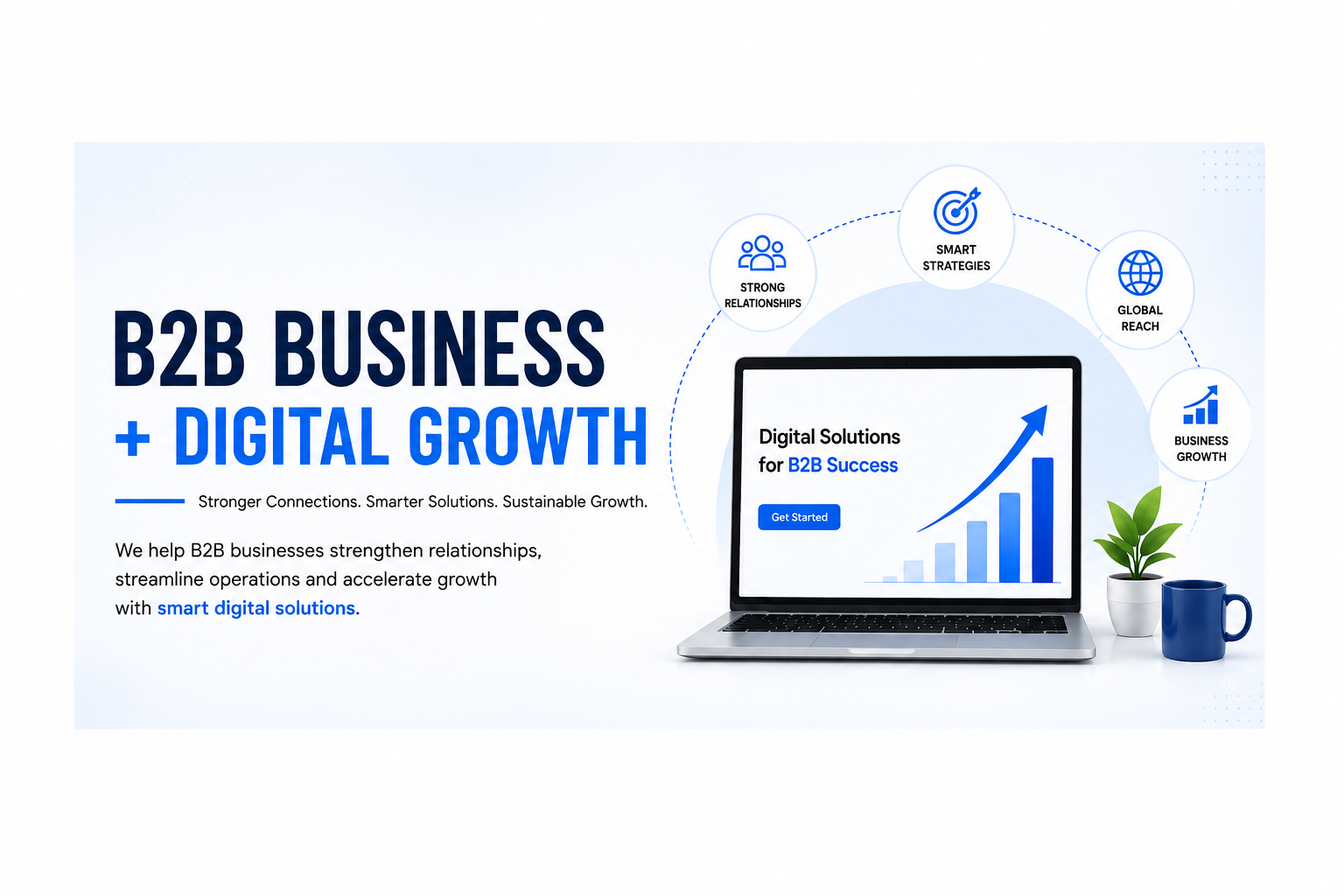
Learn how a strong digital presence, effective B2B website, and smart technology can help businesses improve credibility, customer experience, and long-term growth.
When Your Website Becomes Part of Your Sales Team (Especially in B2B)
A potential client visits your website. Within a few minutes, they are trying to understand what your company does, whether you can solve their problem, and most importantly, whether they can trust you. In a B2B (Business-to-Business) environment, this decision-making process becomes even more critical. Because here, the visitor is not just buying a product—they are evaluating a long-term business partner. That is where a business website becomes more than just an online presence. For a growing company, especially in the B2B space, a well-planned website can explain services, showcase expertise, answer important questions, generate enquiries, and help potential clients take the next step. But achieving this requires more than an attractive homepage. The website needs to be designed around the way businesses actually make decisions.
Why Your B2B Website Matters More Than You Think
In the digital world, your website often creates the first impression before a sales conversation ever happens. In B2B sales cycles, this first impression carries even more weight because decisions are usually made by multiple stakeholders—founders, managers, procurement teams, or technical experts. A potential client may discover your company through Google, social media, a referral, or an online advertisement. Before contacting your team, they are likely to visit your website to evaluate credibility, experience, and capability. If the website is difficult to navigate, unclear, outdated, or slow, you may lose a valuable opportunity without even knowing it. On the other hand, a clear and professional B2B website can help visitors understand your value, build trust, and feel more confident about starting a conversation. .
Building for People, Not Just for Screens
A successful website should not be designed only around how it looks. It should be designed around the people who will use it—especially decision-makers in a B2B context. Visitors should be able to quickly understand:
- What your company does
- Which services you provide
- How you can solve their business problems
- What makes your approach different
- Why they should choose you over competitors
- How they can contact you or request a proposal
Turning B2B Visitors Into Real Business Opportunities
A website should have a purpose beyond displaying information. For many B2B companies, that purpose is generating qualified leads and business enquiries. Strategic calls-to-action such as Request a Consultation, Get a Quote, or Discuss Your Project can guide visitors toward the next step without making the experience feel forced. In B2B scenarios, even small actions like downloading a brochure, booking a demo, or filling a requirement form can become the starting point of a long-term business relationship.
Where Technology Makes a Difference
Modern websites can do much more than present text and images. They can connect with CRM systems, payment gateways, analytics tools, email platforms, APIs, and other business applications. With the right integrations, repetitive tasks can be reduced and important information can move automatically between systems. For B2B businesses, this becomes especially powerful because lead tracking, follow-ups, and sales pipelines can be managed more efficiently. This is where website development becomes closely connected with overall business operations. .
A Website Should Grow With Your B2B Business
Your website should not become a limitation as your company grows. A scalable structure allows you to add new services, features, integrations, landing pages, content, and functionality without rebuilding everything from scratch. This is particularly important for B2B companies, where service offerings, industries, and client requirements often evolve over time. Good development decisions made at the beginning can save significant time and cost later.
The Difference Is in the Details
A professional website is built through many small decisions. The way information is structured. The speed at which pages load. The clarity of the content. The ease of navigation. The quality of the mobile experience. The placement of important calls-to-action. The security and reliability of the platform. Individually, these details may seem small. Together, they shape how B2B clients experience your business online and whether they trust you enough to reach out.
Final Thoughts
A website should not simply tell people that your company exists. It should help them understand why your company is worth considering—especially in a B2B environment where trust and clarity drive decisions. That means combining thoughtful design, useful content, reliable technology, strong performance, and a clear understanding of business goals. When all of these elements work together, a website becomes more than a digital brochure—it becomes a practical part of your sales, marketing, and business growth strategy. At Unnat Technology Services, we build business-focused digital solutions with a simple goal: to turn ideas into reliable, useful, and scalable technology that supports real business needs.